Cold therapy has gone from a fringe athlete's secret to a daily ritual in thousands of Australian homes. But between the hype, the conflicting advice, and the wildly different products on the market, it's hard to know where to start, or whether it's worth the money.
This guide cuts through it. We'll cover what cold therapy actually does to your body, how to start safely, how to choose the right ice bath for an Australian home, and the one question almost every beginner asks: do I really need a chiller?
The short version: Cold water immersion, done consistently, is one of the simplest tools for sharper focus, faster recovery, and a calmer nervous system. You don't need a gym membership or a cryotherapy clinic, you need a well-built tub, a routine you'll actually keep, and somewhere between 2 and 5 minutes a day.
What is cold therapy?
Cold therapy, also called cold water immersion (CWI) or cold plunging, means submerging your body in cold water, typically between 2°C and 15°C, for a short period. It's the deliberate, controlled version of what your grandparents called "a cold shock," and it triggers a cascade of physiological responses your body evolved to handle.
There are a few ways people do it:
-
Cold showers — the easiest entry point, but limited. You can't control the temperature precisely and you can't fully submerge.
-
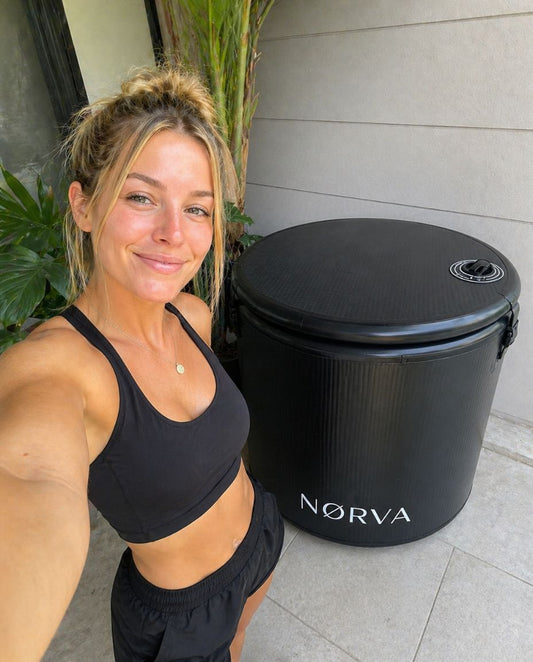
Ice baths at home — a dedicated tub you fill with cold water (and ice, or a chiller). The most practical option for daily use.
-
Cryotherapy chambers — clinic-based, expensive, and not something you can do every morning before work.
For most people building a daily habit, a home ice bath wins on every axis that matters: cost over time, convenience, and consistency.
The science: what cold exposure actually does
Here's what the research points to. We've kept the claims grounded in peer-reviewed studies — the science behind cold therapy is genuinely strong, and it deserves to be cited properly rather than exaggerated.
A sustained lift in focus and mood
In a landmark study, immersion in 14°C water raised blood concentrations of noradrenaline by around 530% and dopamine by around 250% — the neurochemicals behind focus, drive, and mood (Šrámek et al., 2000). These are measured in the bloodstream rather than directly in the brain, but the effect many people describe, a clear-headed, "switched-on" feeling that lasts well beyond the plunge, lines up with this surge.
Faster muscle recovery
Athletes have used cold water immersion for decades to reduce soreness between sessions. A recent network meta-analysis found that cold water immersion meaningfully reduced delayed-onset muscle soreness (DOMS) and improved perceived recovery after hard exercise (Frontiers in Physiology, 2025). If you train, it's one of the cheapest recovery tools available.
A calmer nervous system
Cold water immersion triggers rapid parasympathetic reactivation, your body's "rest and recover" state, reflected in higher vagal heart-rate-variability after a plunge (systematic review, 2025). Over time, many people also report calmer baseline stress and better sleep, though that link is less firmly established than the nervous-system effect itself.
Building resilience over time
The broader picture researchers are excited about is hormesis, small, controlled doses of stress that make your body more resilient. Regular cold exposure has been shown to alter how the body generates its own heat and adapts to temperature (Søberg et al., 2021). Cold is one of the most accessible forms of this kind of training.
A note on honesty: cold therapy is a powerful tool, not a miracle cure. It works best as one consistent habit inside a healthy routine — sleep, movement, food — not instead of one.
How to start cold therapy (the beginner protocol)
You don't need to be a hero on day one. The goal is a habit you'll keep, not a single brutal session you never repeat.
Temperature: Start around 12–15°C. As you adapt over a few weeks, you can work down toward 8–10°C. Colder isn't automatically better, controllable and consistent beats extreme.
Duration & frequency: Begin with 1–2 minutes. Dr Susanna Søberg, whose cold-and-heat research is widely cited, suggests a target of around 11 minutes of cold exposure per week, split across a few short sessions — enough to drive adaptation without overdoing it (Huberman Lab). There's no prize for staying in longer than you need to.
Breathing: The first 30 seconds are the hardest. Slow your exhale, relax your shoulders, and resist the urge to gasp. Controlling your breath is the training.
Timing: Mornings are popular for the focus and energy lift. If you're training specifically for muscle growth, some research suggests avoiding cold immersion in the hour right after strength training, as it may blunt some adaptation — so save the plunge for the morning or a rest day.
Safety first. If you're pregnant, have a heart condition, high blood pressure, or any cardiovascular concern, talk to your doctor before starting. Never plunge alone if you're new, and never combine cold immersion with alcohol.
Choosing the right ice bath for your Australian home
This is where most buying decisions get made — and where the wrong choice ends up unused in a garage. Here's what actually matters.
1. Space and where it'll live
Australian homes vary wildly, apartment balconies, suburban backyards, garages. Be honest about your space before you buy.
2. Build quality and insulation
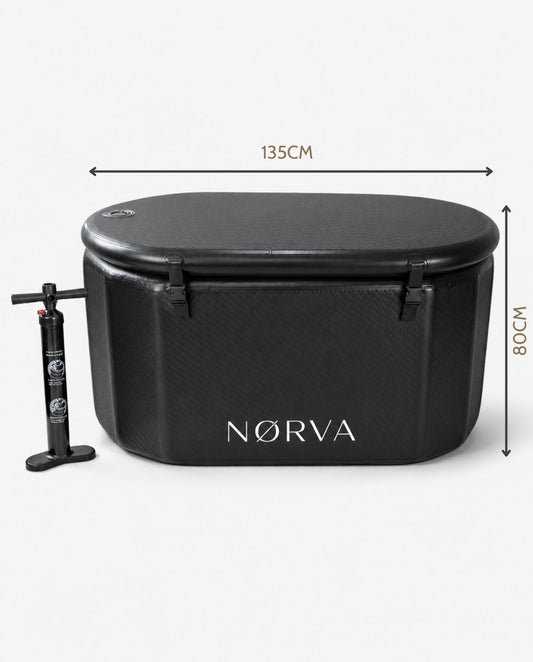
This is what separates a tub you'll use for years from one that leaks and loses temperature in an afternoon. Look for drop-stitch construction (the same pressure-tough material used in premium inflatable watercraft) and insulated walls that hold temperature for hours, not minutes. Cheap tubs feel like a bargain until your water is lukewarm by 7am.
3. How you'll keep it cold
You have two options: ice, or a chiller. This deserves its own section, because it's the question that decides whether cold therapy stays a habit or quietly dies.
Do you need a chiller for your ice bath?
Short answer: you can absolutely start with ice. But a chiller is what makes the habit stick.
Using ice is the cheapest way in. Fill the tub, add ice, plunge. The catch: in the Australian climate, you'll burn through bags of ice fast, especially in summer — and the daily trip to the servo for ice is exactly the kind of friction that kills a new habit by week three. The ongoing cost adds up quietly, too.
A water chiller keeps your bath cold, clean, and ready, automatically. No ice runs. You set your temperature, and it holds it. A good chiller also filters and sanitises the water (look for ozone and UV), so you're not draining and refilling constantly. The maths usually works out: the money you'd spend on ice over a year often rivals the cost of the chiller itself, and the convenience is what keeps you plunging every morning.
If you're serious about making cold therapy a daily ritual, not a novelty, a chiller is the upgrade that pays for itself in consistency. Explore the PolarCore Smart Chiller →
Tip: If budget allows, buying the ice bath and chiller together as a setup is both cheaper and simpler than piecing it together later. See The Morning Protocol bundle →
What makes cold therapy work in Australia specifically
A few things that matter here that you won't read on an American blog:
-
Climate. Our summers make "just use ice" far less practical than it sounds. A chiller earns its keep faster in a warm climate.
-
Power. Any electrical gear (like a chiller) should be designed and certified for Australian standards — 240V/50Hz, standard plug, no electrician required.
-
Support and warranty. Buying from an Australian-owned brand means local support, local stock, and a warranty you can actually claim — not a 90-day promise from an overseas seller you'll never reach.
Common beginner mistakes to avoid
-
Going too cold, too soon. You'll dread it and quit. Start at 12–15°C.
-
Staying in too long. More isn't better. A few focused minutes does the job.
-
Skipping the breathing. Gasping and tensing makes it miserable. Slow exhales make it doable.
-
Buying the cheapest tub. Poor insulation and leaks are the fastest route to an abandoned habit.
-
Relying on ice forever. It's fine to start with, but the friction usually ends the routine. Plan for a chiller if you want it to last.
Start your cold therapy ritual
Cold therapy isn't complicated. It's a few cold minutes, done consistently, in a setup built to last. The hardest part is starting, and the second hardest is removing the friction that makes you stop.
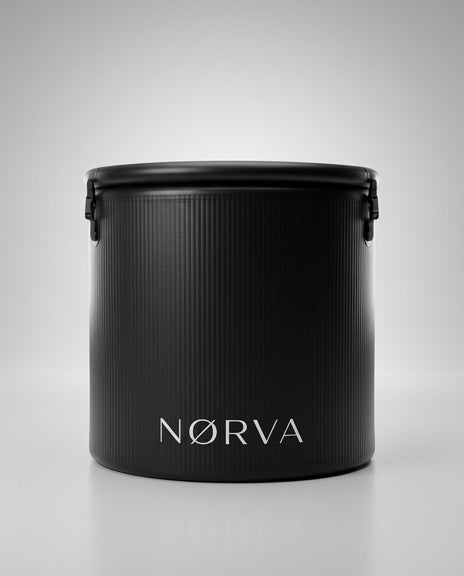
Norva builds ice baths and chillers for exactly that: insulated, pro-grade tubs and a smart chiller that keeps your plunge cold and ready every morning, with free shipping Australia-wide, a 1-year warranty, and local support.
Explore the Norva Ice Bath range →
Build your complete setup with The Morning Protocol →