If you've decided heat therapy belongs in your routine, the next question is the one that stalls most people: infrared or steam? They both make you sweat, they both leave you feeling loose and calm, but they get there in very different ways, and one will suit your space, budget, and goals better than the other.
Here's a clear, honest breakdown so you can choose with confidence rather than guesswork.
The short version: A steam sauna heats the air around you for an intense, enveloping sweat that feels like a traditional sauna. An infrared sauna heats your body directly with gentle radiant warmth, at a lower air temperature you can sit in for longer. Neither is "better." The right one depends on the heat you enjoy, the space you have, and how often you'll actually use it.
The core difference: heating the air vs heating you
Everything else flows from this one distinction.
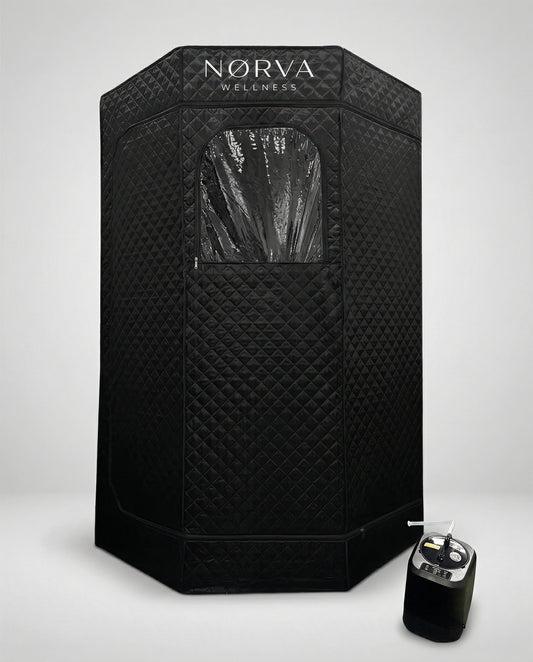
A steam sauna works by heating the air and filling the space with hot, humid steam. Your body warms because the environment around you is hot. It's the classic, immersive sauna feeling: thick heat on your skin, deep sweating, that hits-you-in-the-chest warmth as you step in.
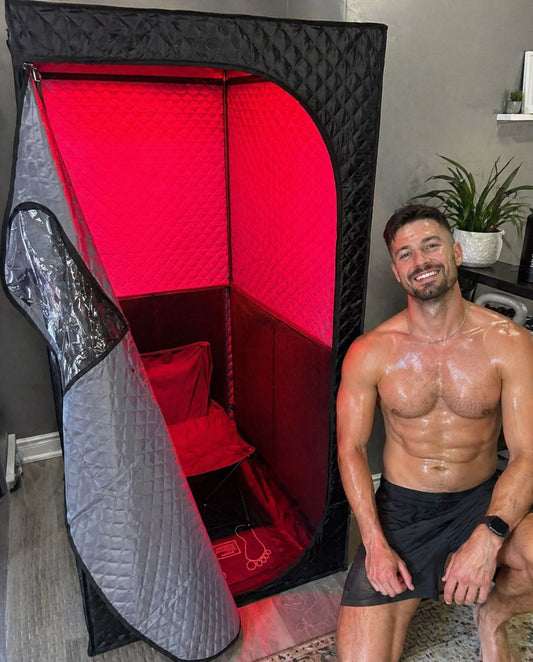
An infrared sauna skips the air almost entirely. Infrared heaters emit radiant warmth that your body absorbs directly, the same kind of warmth you feel from the sun on your skin on a cool day. The air stays noticeably cooler, but your core temperature still rises and you still sweat, often more than people expect.
That single difference shapes the temperature, the feel, the warm-up time, and the running cost of each.
Infrared vs steam, side by side
Heat and feel
-
Steam: Higher humidity, hotter air, a heavy and enveloping heat. Many people find steam better for clearing the head, opening up the chest, and that deeply relaxed, wrung-out feeling afterwards.
-
Infrared: A dry, gentle, radiant warmth. The air is more breathable, so it feels less intense even while your body heats up. Easier to tolerate if you find traditional saunas stifling.
Temperature
-
Steam: Runs hot, with high humidity that makes the heat feel even stronger than the number suggests.
-
Infrared: Runs at a lower air temperature, often a good deal cooler than a steam session, while still raising your core temperature and driving a sweat.
Warm-up time and session length
-
Steam: Needs a little time to build heat and humidity before you step in. Sessions tend to be shorter because the heat is more intense.
-
Infrared: Warms up quickly and, because the air is gentler, many people sit comfortably for longer sessions.
Running cost and power
-
Steam: Heating air and generating steam uses more energy, so running costs are typically higher per session.
-
Infrared: Heating your body directly is more efficient, so infrared usually draws less power and costs less to run day to day.
Space and setup
Both Norva saunas are portable tent designs, so neither needs a built-in cabin, renovation, or dedicated room. They fold away when you're done, which is what makes a home sauna realistic in an apartment, a spare corner, or a garage rather than a luxury only big homes can fit.
What the science actually says
This is where it pays to be honest, because the marketing around saunas often runs ahead of the evidence. Here's the grounded version.
The strongest long-term research is on regular sauna bathing in general. In a large Finnish study that followed 2,315 men for around two decades, those who used a sauna four to seven times a week had a 63% lower risk of sudden cardiac death and roughly half the risk of fatal cardiovascular disease compared with once-a-week users (Laukkanen et al., JAMA Internal Medicine, 2015). The same cohort showed that frequent sauna use was associated with a markedly lower risk of dementia and Alzheimer's disease (Laukkanen et al., Age and Ageing, 2017). A comprehensive review summarised the broader picture of cardiovascular and other benefits from regular heat exposure (Mayo Clinic Proceedings, 2018).
The key mechanism is straightforward: heat raises your core temperature and heart rate in a way that mildly mimics moderate exercise, which over time appears to benefit the heart and blood vessels.
Infrared specifically has a smaller but promising body of evidence. A systematic review and meta-analysis of infrared-style heat therapy found short-term improvements in cardiac function, while noting that more research is needed on long-term effects (systematic review and meta-analysis, 2018). In short, the deepest long-term data sits with regular heat exposure broadly, and infrared's own evidence base is encouraging and still growing.
A note on honesty: a sauna is a powerful recovery and relaxation tool, not a cure for anything. The benefits come from doing it regularly, as one part of a healthy routine, not from a single session.
So which one is right for you?
A simple way to decide:
-
Choose a steam sauna if you love that intense, traditional sauna heat, you want the chest-opening and head-clearing feel of humid warmth, and a hotter, shorter session is what relaxes you most.
-
Choose an infrared sauna if you prefer a gentler heat you can sit in longer, you find traditional saunas too stifling, you want lower running costs, or you want the quickest, easiest start.
There's no wrong answer. Both deliver the regular heat exposure that the research points to. The best sauna is simply the one you'll step into several times a week without it feeling like a chore.
Ready to compare the two directly? See the Norva Infrared Sauna → or see the Norva Steam Sauna →. Want to weigh up the whole range first? Shop all Norva saunas →
The Australian angle
A couple of things matter more here than they would overseas. First, power: any sauna you buy should be designed and certified for Australian standards, 240V/50Hz, with a standard household plug and no electrician required. Second, support and warranty: buying from an Australian-owned brand means local stock, local support, and a warranty you can actually claim, rather than a short promise from an overseas seller you'll struggle to reach.
Going further: pairing heat with cold
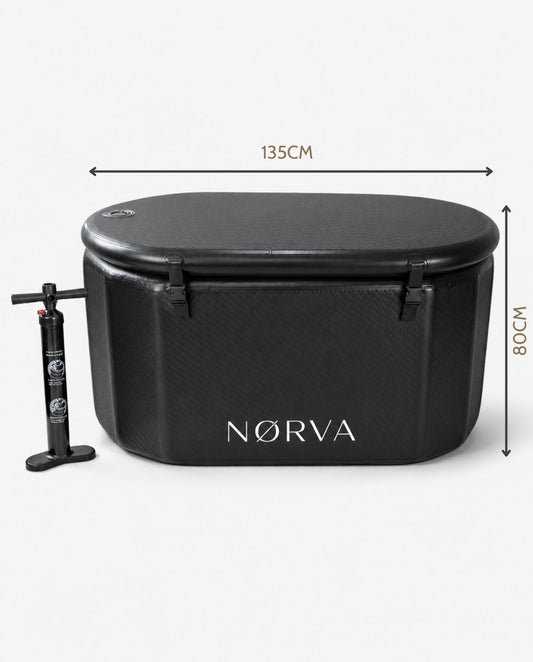
If you're investing in heat, it's worth knowing that some of the most popular protocols alternate hot and cold, known as contrast therapy. A sauna session followed by a cold plunge is a ritual thousands of people build their mornings around. If that's where you're headed, our complete guide to ice baths and cold therapy in Australia covers the cold half of the equation, the science, how to start, and how to choose your setup.
Whichever you choose, the principle is the same as it is with cold: the gear matters, but consistency matters more. Pick the heat you'll actually look forward to, and the habit takes care of the rest.